
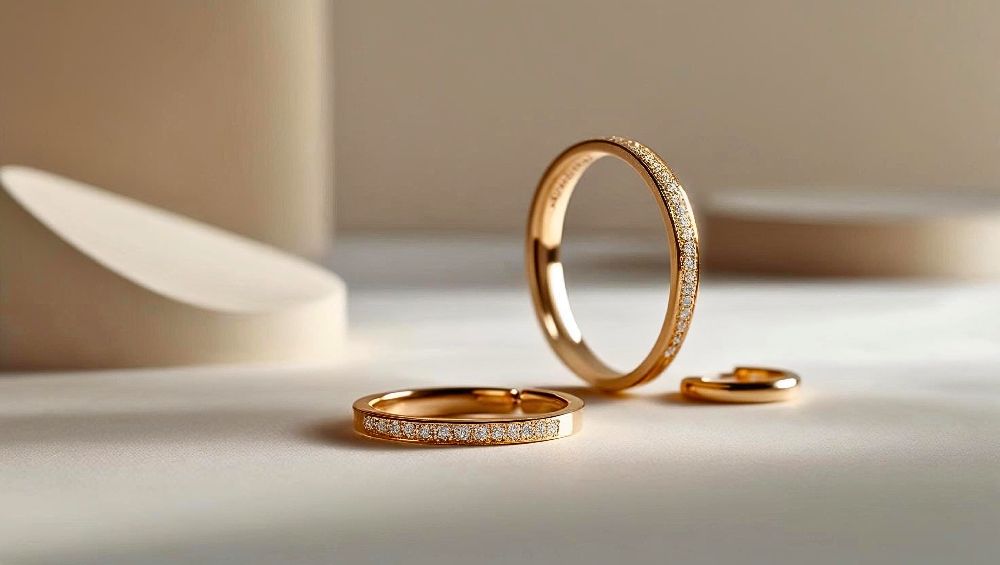
When shopping for gold jewelry, terms like solid gold, gold-filled, and gold-plated often cause confusion. While all three may look similar at first glance, they differ greatly in value, durability, and long-term performance. Understanding these differences helps you choose the right jewelry based on your budget, lifestyle, and purpose.
Let’s break it down in simple terms.
1. Solid Gold Jewelry
What Is Solid Gold?
Solid gold jewelry is made entirely from a gold alloy, meaning gold is mixed with other metals (like copper or silver) to increase strength. It is never hollow or coated.
Common Karats
-
24K – 99.9% pure (very soft, rarely used for jewelry)
-
22K – Traditional, rich yellow, high gold content
-
18K – Durable, premium finish
-
14K – Strong, suitable for daily wear
Pros
✔ High intrinsic value
✔ Does not peel or fade
✔ Long-lasting and repairable
✔ Holds resale and investment value
✔ Hypoallergenic (especially higher karats)
Cons
✖ More expensive
✖ Softer at higher karats
Best for: Investment, weddings, daily wear gold, heirloom pieces
2. Gold-Filled Jewelry
What Is Gold-Filled?
Gold-filled jewelry has a thick layer of gold mechanically bonded to a base metal (usually brass or copper). The gold layer is much thicker than plating—typically 5% of the item’s total weight.
How It’s Made
Heat and pressure fuse a solid gold layer onto the base metal, making it durable and long-lasting.
Pros
✔ Looks like solid gold
✔ More durable than gold-plated
✔ Affordable alternative
✔ Does not peel easily
✔ Suitable for regular wear
Cons
✖ Not solid gold
✖ Limited resale value
✖ Cannot be melted or reworked like solid gold
Best for: Fashion jewelry, budget-friendly daily wear, trend pieces
3. Gold-Plated Jewelry
What Is Gold-Plated?
Gold-plated jewelry has a very thin layer of gold electroplated over a base metal. The gold layer is measured in microns and is much thinner than gold-filled.
Pros
✔ Very affordable
✔ Trendy designs
✔ Wide style variety
✔ Good for occasional wear
Cons
✖ Gold layer wears off over time
✖ Can fade or discolor
✖ Not suitable for daily wear
✖ No resale or investment value
Best for: Short-term fashion, party wear, experimenting with trends
4. Side-by-Side Comparison
| Feature | Solid Gold | Gold-Filled | Gold-Plated |
|---|---|---|---|
| Gold Content | High | Moderate | Very Low |
| Durability | Excellent | Good | Low |
| Peeling/Fading | No | Rare | Yes |
| Daily Wear | Yes | Yes | No |
| Resale Value | High | No | No |
| Price | High | Medium | Low |
5. How to Choose the Right Type for You
-
Choose solid gold if you want long-term value, durability, and investment
-
Choose gold-filled if you want the look of gold at a lower price
-
Choose gold-plated for fashion trends and occasional wear
Always consider:
✔ Budget
✔ Usage frequency
✔ Skin sensitivity
✔ Purpose (investment vs fashion)
6. Tips to Identify Quality Jewelry
✔ Check karat stamps (22K, 18K, etc.)
✔ Ask about gold thickness for filled or plated jewelry
✔ Buy from trusted jewelers
✔ Understand care requirements
✔ Avoid exposing plated jewelry to water and chemicals
Conclusion
Solid gold, gold-filled, and gold-plated jewelry may look similar, but they serve very different purposes. Solid gold is a lifelong investment, gold-filled offers durable beauty at a lower cost, and gold-plated is perfect for short-term fashion. Knowing these differences ensures you choose jewelry that fits your lifestyle and expectations.
When it comes to gold—knowledge is just as valuable as the metal itself.