
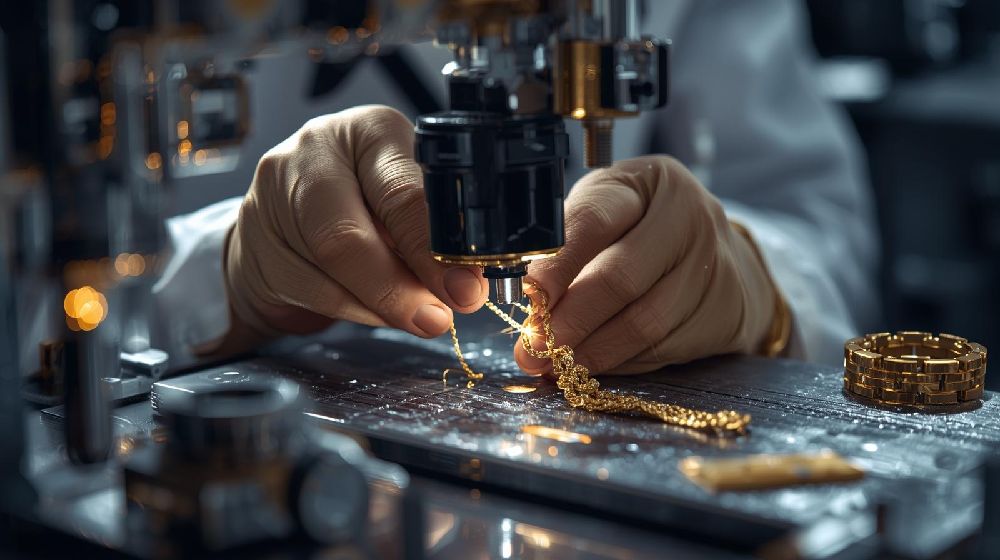
Gold purity is the foundation of fine jewelry. While karat value defines the percentage of pure gold in a piece, maintaining that purity throughout manufacturing requires far more than careful sourcing. From melting and alloying to shaping and finishing, every stage of production must be precisely controlled. This is where precision manufacturing becomes essential—protecting gold purity while enhancing quality, strength, and beauty.
Purity Begins with Controlled Alloying
The first critical step in preserving gold purity is alloy preparation. Even small deviations in alloy composition can affect color, durability, and hallmark accuracy. Precision manufacturing uses measured inputs, temperature-controlled furnaces, and standardized mixing procedures to ensure consistent alloy composition. This eliminates contamination and guarantees uniform purity across every production batch.
Temperature Accuracy During Melting and Forming
Gold is highly sensitive to heat. Excessive temperatures can cause oxidation, grain damage, or unwanted reactions with alloy metals. Precision manufacturing systems regulate temperature at every stage—melting, casting, rolling, and forming—ensuring the gold’s molecular structure remains stable. This control preserves both purity and material integrity.
Digital Design Minimizes Material Stress
Advanced jewelry manufacturing relies on CAD/CAM technology to create exact digital designs before production begins. These systems calculate precise dimensions, thickness, and weight, reducing unnecessary handling and reworking of gold. Less physical stress during shaping means fewer chances of micro-fractures, deformation, or purity loss.
CNC Machining for Accurate Shaping
Traditional manual shaping can introduce inconsistencies that require repeated corrections, increasing material loss. CNC machining allows gold jewelry to be formed with micron-level accuracy. This controlled shaping process maintains uniform thickness and weight, ensuring the gold remains within its specified purity parameters.
Laser Welding Preserves Gold Integrity
Joining components is a sensitive stage in jewelry manufacturing. Conventional soldering can introduce foreign materials that affect purity. Laser welding, used in precision manufacturing, allows joints to be created using the same gold alloy as the piece itself. This technique produces clean, strong bonds without compromising purity or appearance.
Polishing Without Material Loss
Excessive polishing can reduce gold weight and alter purity compliance. Precision manufacturing applies controlled polishing methods that enhance surface brilliance while minimizing gold removal. Automated finishing systems ensure consistent results across multiple pieces without over-processing.
Continuous Quality Monitoring
Precision manufacturing integrates quality checks throughout the production cycle. Weight verification, dimensional accuracy, and purity testing ensure that deviations are identified early. This proactive approach prevents contamination, rework, and quality compromise before the jewelry reaches the final stage.
Purity as a Promise of Value
For customers, gold purity represents trust, authenticity, and long-term value. Precision manufacturing ensures that what is promised in karat is delivered in reality. By protecting purity through controlled processes and advanced technology, jewelry manufacturers uphold both regulatory standards and customer confidence.
Precision as the Guardian of Purity
In fine jewelry, purity cannot be corrected at the end—it must be protected from the beginning. Precision manufacturing acts as the guardian of gold purity, combining technology, discipline, and craftsmanship. The result is jewelry that retains its beauty, value, and integrity for generations.